
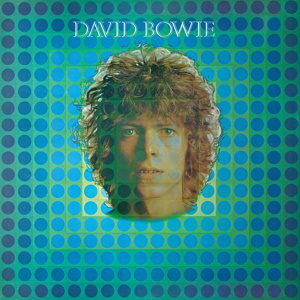
Rating: 8/10
Track Amount: 9
Running Time: 46 minutes and 19 seconds
Genre: Folk Rock/Psychedelic Rock
Personnel: David Bowie (vocals, acoustic guitars and electronics), plus other contributers
Producer: Gus Dudgeon & Tony Visconti
Recording Location: Trident Studios, London, UK
Record Label: Mercury Records/Philips Records
Art Direction: Victor Vasarely & David Bowie
Best Tracks: Space Oddity
Quick Verdict: One of the most underrated albums by David Bowie made
David Bowie was at a crossroads after the failure of his debut album. As a result, he had decided to change his music leanings a bit. Inspired by space travel, he recorded the song Space Oddity and set to work on this, the accompanying album, at hand after being signed to Mercury Records following the recording and the hearing of the Space Oddity demo. This album flopped at the time, but it did pave the way for future successes by David Bowie at large. Notably, this album came at a time and place when space travel was all the rage, at least in the minds of many album listeners. This album also represents the music of the times, which has been classified as a mixture of both Folk Rock and Psychedelic Rock Music. For all intents and purposes, this album should be covered, so let’s warp back to 1969, and we shall hear what we have got.
1. Space Oddity begins with some acoustic guitar strumming in the right channel and launches into a pretty and melodic tune with guitar harmonics and neat drumming. David Bowie sings nicely on this song with some iconic lyrics and musicianship throughout, articulating the outer space experience at hand. This is absolutely fantastic in its own way. A really cool song inspired by the film 2001: A Space Odyssey and, nonetheless, an absolute classic song, perfect for 1969, which was all about Hippies and space travel, both inner and outer space. All in all, this music is gorgeously and wonderfully majestic at hand. A neat and sweet tune with some iconic lyrics, singing and instrumentation throughout. In the midsection, an abrupt tempo change occurs, and this launches right into action with some Beatlesque guitar playing and continues the story of fantastic space travel. A seriously cool tune that is underrated, awesome and pretty to listen to. An absolute winner of a song, with a fine and pretty set of arrangements that sound killer. A must listen to from this album. Simply sweet. It fades out with some interesting guitars and weird electronics. Very good song, however.
2. Unwashed and Somewhat Slightly Dazed is nearly seven minutes long, and begins with some neat acoustic guitar strumming and hi-hats. David Bowie sings neatly on this song, although he definitely has an unusual singing voice at hand. This tune launches into action with a very folk-rock sort of storytelling at hand that sounds cool. A really tuneful and interesting song for what this is. It is very catchy and simple music at hand, with some enjoyable and nicely constructed melodic Pop/Rock structures. Harmonica is thrown into the mix as well, and this tune, although imperfect in its final form, is another genuinely good effort informed by the music trends of the time. This upbeat and enjoyable song has a harmonica solo and some brass section thrown into it for good measure as well. David Bowie may not have the most pleasant singing voice overall, but he could create and deliver a wide variety of music during his lifetime. This is simple and pleasant Pop/Rock Music that sounds awesome and very well played indeed. The music likely goes on for quite a lot longer than it should, but despite this, the solo sections of different instruments are really awesome. The guitar soloing is neat as well. This is the sound of David Bowie branching out and exploring new music territory in 1969. A very, very catchy and enjoyable song, even if it is somewhat repetitive. Brass sections become prominent towards the end, and particularly in the early fade-out. A concluding section of music fades back in, which sounds really great. Nice tune overall. Very wonderful. It ends with David Bowie chuckling in the conclusion as the music stops.
3. Letter To Hermione is not a song about the Harry Potter character, just in case you were wondering. That was yet to exist at this point. It begins with some simple acoustic guitar strumming and synchronised hummed melodies. David Bowie sings quite nicely on this song, and sounds like he is aware of his own musical growth at this point. People may easily dismiss this music, but quite frankly, there is nothing wrong with it at all. An absolutely awesome and divine tune that is devoted to a lady at hand. The acoustic guitars do sound absolutely pretty and brilliant, as David Bowie sings about a lady who is full of melancholy emotion. All in all, a good song that deserves more listening and praise than it gets. It ends with some neat acoustic guitar melodies and hummed harmonies before concluding.
4. Cygnet Committee begins with some loose bass guitars and electric guitars as we go into a nine minute long plus piece. It sounds warped and weird, and this sounds like the product of some controlled LSD use at hand. David Bowie eventually sings well here, even if the material and sounds are quite dated. This sounds like an acoustic jam that Cream could have done back in the day. Drum hits enter, and this tune continues to go on nicely. This is an expansive acoustic-driven piece that eventually has drums and other instrumentation enter. This is very good for what it is, even if this album was not David Bowie’s best. That was to come later on, and you can hear him improving his craft on this album. Still, there is no denying the awesome and simple originality of this music at hand. A pretty and very simple 1960s-style tune. The lyrics are very interesting and articulate, pointing out that there was some great talent within Bowie himself. The music gradually articulates a love for a lady that David Bowie had in mind. This does sound a lot like Cream in the verses, especially. To be fair, this extended jam will not be everyone’s cup of tea. It requires some subtle editing length-wise, which therein lies the flaw with this song. Despite that, there is no doubt that this is a genuinely good music effort. It just seems to go past its welcome lengthwise, although there are many music sections throughout it all. This release is very much like David Bowie crafting an album release that was more in line with 1960s trends rather than the innovative releases he later gave us in the 1970s. Even so, this is genuinely listenable and expressive music that has some rather nasty lyrics in the second half. Obviously, John Lydon was listening closely to David Bowie on this album. Still, there is no doubt that Bowie was doing his best here, even if he hadn’t reached his musical peak. A really awesome and great tune, despite its length. David Bowie was just getting started at this point in time. A good listen that, although it is lengthy, shows Bowie crafting his talent from his early days on. It peaks with repeated vocals and some interesting drumming at the end. A good song, even though it definitely could have been rethought for length’s sake. The outro has some awesome Rock musicianship at hand before fading out.
5. Janine is fortunately much shorter as a song. It continues the Acoustic Rock vibe with some excellent guitar work, audible bass guitar and drumming with some great late 1960s singing and sounds throughout. If anything, this album is much better than expected, and it shows a unique and creatively articulate David Bowie who could create nice 12-string acoustic guitar-based music that simply works. Bowie sings a song of love throughout, and he definitely sounds like he is hungry with ambition and ready to make it in the world of music. This has some catchy handclaps and tambourines in the chorus in the second half. Much better than expected, and showing a side of David Bowie that was far less pretentious than Ziggy Stardust ever was. This simply works nicely. A great listen throughout.
6. An Occasional Dream begins with more 12-string acoustic guitar and Rock instrumentation that simply works well. This launches into a good song about the nature of dreaming itself. David Bowie again sings on an underrated album at hand, with some flute playing on this song. A marvellous and excellent listen, even if it sounds a lot like The Incredible String Band at hand. No big deal, though. This music has many layers of musicality to be explored, and it does sound really simply melodic, enjoyable and fantastic throughout. Bowie sounds like a mastermind of late 1960s Rock Music on this album. If anything, this album really makes one want to buy a 12-string acoustic guitar and play some Rock tunes with it. This is a strong selling point for this album. Bowie’s vocals at the end are fantastic. It ends with the flutes sustaining away.
7. Wild Eyed Boy From Freecloud begins with some more 12-string acoustic guitar and some other interesting instrumentation at hand. This launches neatly into action with some storytelling vocals from David Bowie and a dark, foreboding sort of music backdrop. This is a bit weird and gloomy, but nonetheless, it is a good effort. It isn’t a great effort, having said that. No big deal, this doesn’t need to be skipped at all here. If anything, this album shows that from acoustic guitar and vocals alone, one can make brilliant and simply impressive music at hand. This sounds cool and has some string sections in a very Eleanor Rigby sort of way, alongside other fairly dated music arrangements to support the song. David Bowie does sing very nicely on this album, and in particular, on this song at hand. Bowie may not have the best singing voice in Rock Music, but he can definitely sing well on this song. Handclaps, brass and other orchestration are on this song. A dramatic and interesting song that is very much in line with 1960s Music and thought. All in all, another fairly good listen, which vocally references peace and love, the Hippie concept at the time. Good but flawed tune.
8. God Knows I’m Good is a three-minute-long piece of music with more 12-string acoustic guitar at hand. David Bowie sings about modern life back in the 1960s, and delivers a wonderful, upbeat tune at hand. Bowie delivers a fine storytelling song, which, although it may not be as memorable as his late 1970s efforts, is just as good in its own way. Some nicely delivered performances and playing at hand, which sound very simple but are extremely lovable. The song and music just exude cool, and this music is by far more impressive than you’d think. David Bowie is a storyteller extraordinaire, and from this album onwards, there was no holding back in the future on this talented appeal of his music. A really dramatic and interesting song with some of the coolest 12-string acoustic guitar you will hear. Nice tune. It fades out softly.
9. Memory Of A Free Festival is the final song on this album, and runs for over seven minutes in length. It begins with some electronic keyboards and has David Bowie speaking over the top of it. This progresses into a keyboard section that, although lengthy, is bearable. This continues on for some time, just before David Bowie starts singing quite well on this song. This tune launches into action with some very iconic lyricism and a keyboard section that goes on a bit too long just by itself. This does drag on a bit, and unnecessarily so. It is a bit of a late 1960s music piece, especially lyrically, which is the focus of this song. This song eventually has some sounds and sampling enter, which sound freaky. This is like the side effects of a bad LSD trip at hand. The second half launches into a chanted section of vocals that make this a lot better and quite catchy in its orientation. This is never really done in music now and is a really interesting and refreshing listen at hand. Beautiful, the second half of the song makes up for the wait. “The sun machine is coming down, and we’re gonna have a party…” is chanted at length on this song, and it really is fantastic to hear. This sounds very late 1960s musically, and if anything, David Bowie was on his way up from this album onwards. A great and infectious listen with a super long fade out of the chanting, followed by David Bowie singing the chanted section, amongst some other weird instrumentation.
No doubt that, even though this is not a 100% solid gold classic album, this is the sound of David Bowie improving his music and craft to the point that he was starting to embrace both critical and commercial success at hand. The main flaw with this album, however, is a lack of proper editing. Some of the songs are a little bland and unnecessarily long. However, despite that flaw, this is something that fans of the 1960s can embrace musically. Space Oddity, in particular, is an iconic song. Should you listen to this album? If you like Rock Music with a dash of 12-string acoustic guitar, go for it. Fans of more postmodern music styles will wish to avoid this one, however.
If you like this article, please like, share, comment and follow me on The Ultimate Music Library. Thank you, Chris Airey.
 The Ultimate Music Library
I love this album. Underrated in the Bowie canon.
LikeLike