
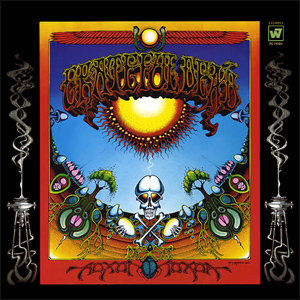
Although the Grateful Dead had not hit their stride totally yet, they certainly had released some valuable and interesting music to listen to. Their earliest releases, although promising, were not their best overall. This album was the first for the Grateful Dead to be recorded entirely in San Francisco, their hometown. It was also recorded on (then) sophisticated 16-track studio technology, which was a technological breakthrough at the time. Ultimately, the band ran into financial problems along the way as they re-recorded the entirety of this album with the new 16-track technology, as soon as they got their hands on it. Although this album had mainly positive reviews, the band still needed an album breakthrough at the time. The album title, which has no meaning, is interesting as well. It was recorded over six months between 1968 and 1969, being released on 20 June 1969 on Warner Bros Records. The album was also recorded at Pacific Recording and Pacific High Recording studios, respectively, and was self-produced by the group, running for 36 minutes. The Grateful Dead were: Jerry Garcia (guitars and vocals); Bob Weir (guitar, vocals); Ron “Pigpen” McKernan (organ, percussion); Tom Constanten (keyboards); Phil Lesh (bass guitar, vocals); Bill Kreutzmann (drums, percussion) and Mickey Hart (drums, percussion). Let’s warp back to 1969 and listen to this music, and we shall hear what we have on offer.
1. St. Stephen begins with some surreal and lush instrumentation that is very loose from the beginning. This is a very good set of overdubbed Wall of Sound. Soon enough, singing emerges, and this triumphant tune gets moving. Jerry Garcia is a sensationally great guitarist to listen to, and the music and sounds are gorgeously powerful throughout. This, of course, is musically varied and quite Psychedelic, in its own way. The lyrics paint a brilliant picture of artistry throughout, and an xylophone is present throughout this song. This is an interesting and intelligent tune, which quickly launches into a descriptively beautiful Rock ballad. This has a huge variety of instrumentation on this song throughout, and the whole tune is beautifully majestic. A very cool, interesting and clever listen from start to finish, this music is lovely, artistic and super sweet. Obviously designed for an LSD trip sort of experience, but good as well on its own to listen to. The outro is crazy sounding, with some awesome piano being played as well.
2. Dupree’s Diamond Blues is a strange yet colourful acoustic guitar-led ballad which is cheerful and catchy throughout. This song is really sweet and enjoyable, and although the Hippie dream may be long gone today, the music of the Grateful Dead is still as creatively enjoyable and as energetic as any release today. A really cool tune about a jewellery thief at large who gets caught and gets sentenced to death. Some cool organ is present, and this tune is a wacky one with a strange storytelling set of lyrics. A quirky and very unusual Psychedelic Music listen throughout. A good fictional tale set to some wacky and very much The Beach Boys Pet Sounds (1966) music template. Cool.
3. Rosemary begins with some multitracked acoustic guitars, watery treated vocals and sounds very trippy throughout. This would be a bit better if the singing wasn’t treated; to be frank, this song doesn’t need it at all. All the same, this is quite a good listening experience, and it has majesty and flair to it all. Short and sweet, this is less than two minutes long. Gentle and humane.
4. Doin’ That Rag is a more traditional Grateful Dead tune with odd guitars, singing that is quite bizarre and trippy keyboards throughout. Again, this is much better than what one would expect. Even so, this music is a powerful reminder of exactly why the 1960s were a better music era than anything being made in the name of Popular Music today. This bizarre and quirky tune is a humourous, different and surreal tune that is a good listen. This tune is a quirky and out there listen that sounds very unusual and quite Psychedelic in its outlook. This was the Hippie era of heavy drug use, and the Grateful Dead were champions of LSD in their time. A wacky, quirky and tongue-in-cheek tune. This does sound different, and it is a good tune for all its oddness. It finishes up with a fast-paced repeated outro. Good effort.
5. Mountains of the Moon begins with some interesting acoustic guitar, bass playing and harpsichord, which sounds very, very iconic throughout. This music is a quirky and decent addition full of imagination, colour and consistency throughout. This tune is perfect as an acoustic campfire song favourite to listen to, and it sounds very calm, sweet and lovely throughout. All in all, this sounds pretty awesome and very cool, especially in retrospect. This isn’t even the best Grateful Dead album, yet it steamrolls anything made in the name of music today on the Billboard charts. An extremely gorgeous and sweetly melodic song to listen to. This sounds majestic and very, very beautiful musically. A lovely, pure and sweet piece of music, likely inspired by tripping out, this is totally awesome to hear. A brilliant song throughout. It fades out sweetly at the end with harmonies and instrumentation galore.
6. China Cat Sunflower begins with some awesome drum rolls and quickly launches into a quirky and original artistic music groove. An enjoyable song throughout, this is proof that, even in 1969, the Grateful Dead had a really amazing potential to become a hugely legendary music group. This is another very cool song to listen to, and the music and melodies are groovy and quirky. This music doesn’t really have a lyrical meaning per se. Instead, it is groovy, trippy, Hippie stuff. Nonetheless, this does sound beautiful and amusingly awesome for what it all is. All in all, this is a better-than-expected album. Very quirky and original listening throughout. The outro sounds intense and wonderfully different. Another solid tune.
7. What’s Become of the Baby is an eight-minute-long piece. It begins with some treated vocals that use some Indian phrasing and put to good use the 16-track technology that was new at the time. A gong hit emerges, whilst the vocals continue on for some time. This is a very interesting and Psychedelic piece of music. It is difficult to understand why this only has vocals. It would have been a better track if this were shortened and had some other instrumentation thrown into the mix. This is obviously an experimental piece of music, but it isn’t exactly suitable for this album. It’s not outright bad, but eight minutes of this is rather absurd. In any case, these reversed-sounding vocals are very cool-sounding. Unfortunately, this is just an experimental track that really should not be on this album. It is just vocals and occasional gong hits, both treated. This lacks imagination and asks the question: why on earth is this tune here? Nonetheless, it is okay, but not something one can regularly listen to. Very bizarre and lacking a sense of purpose. The vocals get louder in the second half, but this pointless listen drags on. This isn’t a decent addition to this album, and it falls flat, sadly. This goes on and on, and prevents this album from being a classic album, sadly. It is drug-inspired experimentation, which should not have been green-lighted for this album release. Towards the end, it has some sustained harmonies and a strange mixture of sounds going on. It finally ends after over eight minutes of rather unnecessary listening. Do skip this one if you can.
8. Cosmic Charlie is the final track on this album. It is a lot better, especially what had come just before it. It has some interesting guitars, both electric and acoustic, and quickly launches into an upbeat and decent song to listen to. All in all, this is an indication of the two classic studio albums that were to follow. It ends this album well on a good note that, warts and all, this is sweet and enjoyable listening. The lyrics are quite Psychedelic, and the music is very much West Coast 1960s in its own way. All in all, a really great way to conclude a (mostly) good album to listen to. This music is so wonderful and forward-thinking in its own way, and it is seriously enjoyable and melodically magical as well. This is one of the better songs on this album, and it has character and energy throughout it. The slide guitars, acoustic guitar and organ are all a nice touch to match the vocals. The second half has repeated harmonies, followed by a great instrumental section that has drums emerge. A very solidly good listen, and this wraps up the end of the album, as well as the Psychedelic 1960s for the Grateful Dead. A very awesome listening experience. The outro is heavenly and sublime.
This is not a perfect album, by any means. It is musically fairly inconsistent and flawed, although most of the tracks here are quite listenable. Even so, the vocals only experimental second from last track, by all rights, should not be on this album. It prevents this from being a classic album. Fortunately, the Grateful Dead were going to release two of their masterpieces in the following year (1970). This is a step forward, but not quite there yet overall. Should you listen to this album? Fans of Psychedelic Rock will no doubt enjoy this, and this album is perfect for that crowd, provided that you are willing to skip a track or two. Only casual fans of the Grateful Dead or fans of other music should really look elsewhere.
Good but flawed.
7/10
 The Ultimate Music Library
I really like this review which is as good an introduction to the album as one could wish for, as well as a great read for an old Dead Head such as yours truly. I think this was the first album that Robert Hunter had an influence over, and I think that probably contributed to its character. I think he amplified the folk element and although it might be a little clunky in songs like “What’s become of the baby” it permeated their work ever after and – for me – just got better and established the Dead as a great gateway into traditional American music. It’s an oft-expressed view that the Dead weren’t a studio band, and one of the things I don’t like about this album is the quality of the production which can be a bit hard on the ears.
LikeLike
Hey. That’s some great insight. Thanks a bunch! 👍
LikeLike
There is film of the sessions in Long Strange Trip. I think that is a great documentary for anyone interested in the band, although it is over-focused on Garcia (and one narrative of his life). So I’d also recommend The Other One about Bob Weir.
LikeLike
That’s great. Thank you for that 😊
LikeLike
And to explain that production quality, this is what Garcia said about making the album: “If you want to make What’s Become of the Baby work, I’ll tell you what to do: get a tank of nitrous oxide. All of a sudden it works! When we were doing our mixes on that we had a tank. We were all there with hoses. All kinds of weird shit was happening. It was totally mad, total lunacy.” Sound engineer Phil Sawyer ponted out the downside: “It was like a circus in there.”
LikeLiked by 1 person
Haha. I bet it was!
LikeLike