
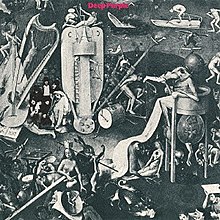
The late 1960s saw a flurry of releases from the band that pioneered a fusion of Psychedelic Rock, Progressive Rock and Classical Music music themes, Deep Purple. The band was having some issues at this point, notably with singer Rod Evans, who the band was seriously doubting his vocal abilities. He was soon replaced by Ian Gillan, a close contact of Deep Purple, after the recording of this album, thus creating the classic lineup of Deep Purple. This album also was largely ignored by critics and also saw limited commercial success, due to the band’s Harvest label facing financial difficulties. Therefore, this album has been largely unnoticed over time. This self-titled release was produced by Derek Lawrence in De Lane Lea studios in London, UK. The album, also known as Deep Purple III, was released back in June 1969. Deep Purple were on this album: Rod Evans (vocals); Ritchie Blackmore (guitars); Nick Simper (bass guitar); Jon Lord (keyboards and additional instrumentation) and Ian Paice (drums and percussion). Let’s take a listen to this album, and we shall hear if it is any good.
1. Chasing Shadows launches right into it with tom-tom drums and percussion which sounds great, alongside some neat guitar work. The vocals quickly come in, and although the singing is good, Rod Evans is no Ian Gillan. The music present is good but it is clear that the group were not on the same trajectory as the singer involved here. In any case, this is very, very good to listen to. One can hear the hard work and imagination put into this music. The drumming in particular is worth listening to. Ritchie Blackmore plays some neat guitar fills throughout, and he proves himself to be a decent and reputable guitarist throughout. He plays some awesome wah-wah guitar licks and he sounds absolutely awesome in the process. This is mostly an instrumental delight, but a worthwhile listen at hand. A very good listen that is powerful, magical and very much in vogue with the late 1960s, this is a good song. Understandably, the group were obviously dissatisfied with the singer, and one can clearly hear why this was the case on this album in particular. Jon Lord plays a neat organ solo towards the end, sounding very unique and wonderful throughout. This music is very good on its own and is certainly interesting to hear. Good job by Deep Purple, this sounds uniquely wonderful. Worth a listen and never boring throughout its over five minutes of running.
2. Blind begins with some harpsichord and guitars, mixed in with some neat drumming. Singing emerges and this tune illuminates a lot of what the late 1960s was best about musically. Indeed, this was the era of King Crimson and other similar Progressive Rock groups that were just getting started. This rubbed off on Deep Purple, and one can hear that their craft was rapidly improving by this point. The harpsichord and intricate drumming are worth mentioning here. Ritchie Blackmore launches into a fuzzy wah-wah guitar solo near the midsection, and he proves himself to be a fine player throughout. In any case, this is a good listen, although the band themselves are being held back by Rod Evan’s singing at this point. Obviously, one can hear that both his singing and the band’s work were on different levels by this album release. Nonetheless, one can definitely hear the progression in the band’s craft. The second half has a wonderful instrumentation section that sounds really good to listen to. A piece of art, just like a painting from the 18th century, this is music getting into the world of the higher artistry that there is. Nonetheless, this does sound really great. Good to hear, the harpsichord at the end is very tasty sounding.
3. Lalena begins with some organ, typically the sound of this era. Cymbals rush in, alongside some clean electric guitar work. Vocals enter, which are calm and smooth. This song is a good listen and is about a lady of one’s fancy. Nonetheless, this is a little underwhelming to listen to. Eventually, this song gradually leads into an organ-led ballad that is passionately romantic throughout. Although good, this album doesn’t sound like a Deep Purple release. It lacks some of the magic that other later Deep Purple releases had, particularly with the singing. The instrumental midsection is quite sweet, and it seems that the instrumental section far outweighs the song sections by this point. Deep Purple obviously knew their craft, all the same. In any case, this love song is a sweet one, and it does have some appeal throughout. The lyrics are simplistic and rather unimaginative, but this is made up by some great instrumentation playing throughout. A good but not great listen throughout. Ritchie Blackmore plays some interesting fills throughout, especially at the end of it all.
4. Fault Line is a short piece with reversed drums and organs, with some fuzz bass guitar. This is an instrumental piece but sounds very odd in the process of it all. Some screaming guitar licks are present as well. This is a good listen, but there is nothing overly noteworthy here. This does sound very good, although it is not a great piece of music. It ends with some tape-edited rushes of sound.
5. The Painter segues in from the previous piece and sounds loud and energetic. It is a fantastic listen, and it just sounds really good in a Deep Purple way. Singing emerges, and this tune comes gloriously alive. This is one of the better songs with a Bluesy feel from this album. The music throughout is an ode to the artist within oneself, which is a cool and clever listen. Ritchie Blackmore is the real star on this tune, with some interesting and wonderful Fender Stratocaster licks being played throughout. This is very interesting, artistic and clever music that sounds indescribably good. Deep Purple obviously knew how to make a very wonderful Rock Music jam come alive. The organ playing in the second half is very good as well. A lively and lovely ode to music itself, this sounds tremendously top. The singing returns to the ideal of the artist within. A top tune from this album and it ends with a ton of dramatic drum fills. Excellent.
6. Why Didn’t Rosemary? begins with some weird ascending/descending guitars, quickly launching into a fantabulous song that is good to hear. This is a 12-bar Blues-styled song that showcases Deep Purple exploring a Blues & Roots sort of musical feel throughout. All the same, this is straightforward and good to listen to. There is a majestic organ solo in the first half of the song that sounds quintessentially Deep Purple, followed by an awesome Ritchie Blackmore solo section. It is quite clear that, even if the band hadn’t found Ian Gillan by this point, they were definitely on a roll in a musical way. Playing with precision and finesse, Ritchie Blackmore shows the world of music what he has got. A very noteworthy and interesting tune from this album, this sounds incredibly awesome throughout. It launches back into the song section in the second half, sounding incredibly accomplished and musically wonderful throughout. A high spot of this album, Deep Purple do their best to impress. A really legendary listening experience, this music is awesome to hear. Fine and musically accomplished throughout. Never a dull moment throughout its five-minute-long running time.
7. Bird Has Flown might be a not-so-subtle reference to The Beatles own Norwegian Wood (This Bird Has Flown) from their 1965 album release Rubber Soul. It begins with some pounding drum rolls and launches into an original song that sounds odd. Regardless, this is likely filler but having said that, it does sound decent and anthemic throughout. The music is a bit awkward sounding, but it is okay. Not top-notch, just okay. It sounds like Deep Purple merely put this onto this album to buy themselves some running time. In any case, this music is okay but if you want to skip ahead on any song of this album, this one might be it. Fortunately, it is less than three minutes in length. It’s okay but not phenomenally good.
8. April is a 12-minute long extended piece that begins with a loud organ playing away. This sounds very Church-like, to begin with. Strummed acoustic guitar in the right channel occurs and piano enters, along with some gorgeous acoustic lead guitar playing in the left channel. This sounds melodic, moving and sweet in a musical sense. This is sweet, touching and beautiful throughout. The music and playing are a step ahead for Deep Purple at this point. This has some interesting build-up of sounds and melodic structures, with some fuzz guitar thrown into the mix as well in the left channel. This gradually progresses along very nicely and has some gospel-styled backing vocals thrown into the mix. A very sweet, intelligent and articulate music listening experience, this is Deep Purple beginning to form their own music identity in a longer than usual track. All in all, this is a very wonderful and inspiring listen. This is essentially proto-Pink Floyd before they released their first Progressive Rock masterwork in 1970, Atom Heart Mother. This breaks down into a gospel-styled tune as it progresses towards the midsection, with the other elements of the song playing along very nicely. Some string sections then enter, and this has a pseudo-Classical Music feel to all of it. A bit strange, but very welcome to listen to throughout. This has a certain sort of neo-classical Music listening experience to it. Not a bad thing at all, it sounds very sweet, in fact. Towards the midsection is a great combination of traditional strings and some other instrumentation to be heard. This does continue for some time and sounds soothing and well-executed. Wind instrumentation follows, which is also welcome here. All in all, a wonderful and listenable music experience that has majestic, interesting sounds and finesse. This music is a really tremendous listen and very much breaks the mould of what was accepted in Rock Music at the time. This Classical Music styled section continues throughout the majority of the tune and it sounds certainly different and accomplished. Without warning, the band comes back in with drumming and bass guitar, before Ritchie Blackmore plays, signalling the song at hand. Rod Evans sings smoothly on this tune, and Deep Purple get going into their Rock Music groove. Seriously good to hear. The organ becomes prominent during the song, as the chorus builds up very nicely. This song gradually reaches its end with this Progressive Rock jam. A good but somewhat lukewarm listen, this is Deep Purple looking ahead to the 1970s with hope. Understandably, they needed a better singer at this point, which they eventually got. Regardless, this song ends with a jam session with Ritchie Blackmore soloing away sweetly. A decent conclusion to a good album that found the band at a crossroads. Interesting to hear, all the way through to the fade out.
This is not a perfect Deep Purple album. However, having said that, there are definitely moments where the band shines through, and in particular, Ritchie Blackmore plays a mean guitar throughout. However, it was clear by this time that Rod Evans was not the ultimate singer of Deep Purple, and the material suffered on this album as a result. Still, it certainly has its moments of music promise. Should you listen to this album? If you love Progressive Rock and anything by Deep Purple, this should be an easy listen for you. However, if you despise long instrumental-based songs that aren’t in a classic album, you may want to look elsewhere. Fans of Deep Purple will be pleased to hear that reissues of the album include some extra tracks, so seek them out if you are interested.
A good album for what it is, with a brighter future ahead for Deep Purple.
7/10
 The Ultimate Music Library