
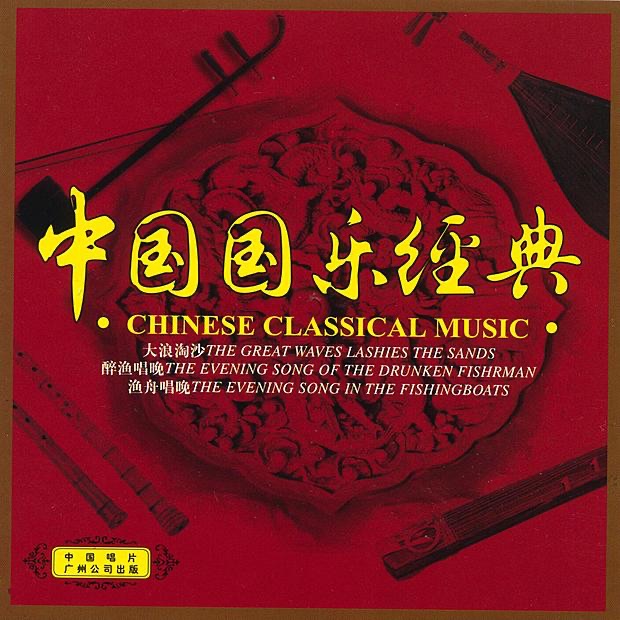
Although this album is simply a compilation of Chinese Classical Music, this is no doubt a special release. With its collection of fine Chinese musical artists, rich history and gorgeously amazing cover artwork, this two-hour-long double disc release no doubt needs to be heard and explored by the listener in full. Western musicians often ignore the music of the Far East, frequently using some rather ignorant and prejudiced stereotypes in relation to that form of music. However, this form of music is as historically a necessity to understand as much as Bach, let alone artists such as The Beatles. With zero prejudice or judgement, let’s take a listen to this album and we shall hear where it takes us.
River Of Sorrow is by Min Huifen and is eight minutes in length. It begins with silence, followed by a gong hit and launches into a suspenseful piece of Eastern flavoured Classical Music. From the start, this is very beautiful and well done per se. It sounds surreal, even for Classical Music. This is a really sweet and beautiful effort. Soon into it, Chinese instrumentation and sounds enter, making this piece come nicely alive. This is absolutely gorgeous for a melancholy piece, and it sure sounds good. The mixture of Western and Eastern instrumentation throughout is absolutely beautiful. A very sweet and interesting listening experience throughout. This progresses along very nicely indeed. This is less depressingly beautiful, just melodically beautiful as a piece of music. A great listen, there is a breakdown in the middle of all this, which is very sweet musically to listen to. Some great Mandolin is throughout this tune, and it is followed by piano and other interesting mash-ups of music and musicianship. The second half continues the beautiful melodies at hand and does sound really great. A super sweet and different tune, it builds up to a discordant string section that is very Eastern and Chinese in the second half. This is a very majestic and unique listening experience throughout. A grand mixture of Western Classical Music and Eastern Classical Music sounds, this is definitely something to be heard today. Great to hear, all the same. It approaches the end with some dramatic changes and a more subtle approach to melodies, with some striking Eastern melodies played along nicely. A very good listen indeed, it finishes up nicely with strings and Eastern instrumentation. Great.
Billows Washing Beach Sand is a piece of music featuring Du Cong, Liu Ying and Min Huifen. It begins with an excellent and dramatic mixture of both Western and Eastern instrumentation, and it sounds really great per se. Wind instrumentation enters, and this piece comes nicely alive. A very tranquil and different-sounding tune, this sounds incredibly beautiful and pretty throughout. A really very sweet and excellent listen, even if the musical fusion of sound is a bit awkward. There is a good mixture of Eastern and Western sounds and musical structures in this tune. A good listen, although the mixed-up sounds don’t sound as natural as they could. Having said that, this is a great starting point for a combination of Eastern and Western sounds. In the midsection is a gorgeous wind instrument part, followed by the East/West orchestration fusion. This is likely a good recommendation for those music fans who have never heard Eastern Music in their lives and would like to hear a good sample of the Far East. A very cool listen, all the same. The music flows quite well, even if this music is not the best example of Chinese Classical Music. Still, it has some significant musical value throughout. A great listen, all the same. For its oddity, this is a good listen from start to finish.
The Princesses of Ming Dynasty features Liu Ying. This is a string section based piece based on Eastern melodic scales and sounds very pretty. This fusion of Eastern melodies and eventually, instruments that enter, along with a Western musical basis, sounds fantastic. This is typically Chinese in its own way and sounds quite clearly fantastic. This is a fairly popular piece from this album and continues the awkward yet successful musical fusion of sound throughout this album. All the same, this does sound really great to listen to. A decent piece of music, it takes the imagination back to the Ming Dynasty itself, which was a significantly important period of time in China’s history. Just remember that China has a deep and rich history that spans thousands of years. This piece of music is incredibly good and confirms this sort of legend. A really great piece of music to listen to, even if the musical fusion is weird. Which it is. Good to hear all the same, however. It ends moodily with strings and fluttering instrumentation.
A Sprig Of Flowers features Du Cong and exceeds eight minutes in length. It launches into a strange and lush piece of instrumentation and some rather odd horn playing on it. This is very odd and sounds out there in a musical sense. The horn part is very shrill, but different all the same. This album is fairly ordinary in parts, and this is proof of that. Piano enters, along with atmospheric sounds to boot. A good listen but by no means really anything outright fantastic. The shrill horn playing goes on for much longer than expected or wanted, and this tune eventually has a string section play along to it. Indeed, this is a very explorational tune. This isn’t the greatest Chinese instrumental ever, having said that. The horns and wind instruments throughout, in fact, sound very awful and cringeworthy as you listen to this piece. Skip ahead if you wish to. All the same, this music is okay but the horn instrument indeed will leave a sour taste in your mouth. The music present isn’t that well thought out, unfortunately. In any case, this is still listenable, just not as deeply as one would expect. If you never have heard Chinese instrumental music and/or are rather curious about that genre, this album is for you. Otherwise, this will sound disappointing to the seasoned listener. This quickly changes into a strange sort of village jig in the second half which isn’t that impressive, either. This is a strange fusion of Western Classical Music and Eastern sounds and influences throughout. This also could be a lot better done, however. One of the weirdest pieces of Chinese-based music you will ever hear, and quite frankly, not that good. It has a false ending, followed by more atrocious horn playing. This ends with a grand finale, and this is definitely not worth hearing. It ends with some rapid percussion and Eastern strings. Weird.
The Morning In The Mountain Villages of the Miao People features Min Huifen. It begins with an orchestral fade-in and sounds only a little better than the previous piece of music. The awkward fusion of East and West in a musical sense continues onwards. It doesn’t sound any better at all, and this is good at best and outright weird at worst. In any case, this tune is still fairly upbeat sounding throughout, just very different. In any case, the music gradually builds up to an unusual climax in the first half with strings galore. The string section that follows with weird wind instrumentation is very different. Kind of catchy, but in an odd way, this sounds very refreshing to hear, oddly enough. A more cheerful and bright-sounding tune than the other pieces on this album, this progresses along nicely. A good listening experience that improves as it goes on. Westerners aren’t often into Chinese history, music or culture but having an open mind certainly does help. A very good listen, all the same. Towards the end is a call-and-response section, followed by an interesting climatic point for this music. Good to hear, and much better than the track before it.
The Poem of Spring features Liu Ying. It begins with a gorgeous lone Chinese instrumental melody and some chimes to match it. It sounds simple, beautiful yet sad. This gradually builds up very nicely in a musical way and gets you hooked on the sound at hand. A lovely listening experience all the same, this sounds incredibly awesome for what it is. One of the better and more memorable pieces of music from this double album. It quickly enters into an upbeat listening section that sounds quirky yet grand musically. A super sweet and gorgeous piece of Chinese Music, just like a fine piece of painted art. Dramatic, simple and beautiful throughout. This music will have a lasting impact on the listener, particularly if you are not a regular Chinese Classical Music listener. All the same, this is very brilliant to hear. In the second half, the intense melodies build up and release throughout, sounding absolutely wonderful. Some background sounds, such as percussion and guitar are thrown into the mix as well. A really awesome listen, and a definite highlight from start to finish. Enjoyable music is heard here, and this is the best track so far on this double album. Thrilling listening, and very beautiful.
Drunk Fisherman Singing at Dusk is by Du Cong. It is a five-minute-long piece. It begins with some deep Chinese string-plucked melodies and sounds very dark. Nonetheless, this is traditional Chinese Music to get you listening to something otherworldly. A thoroughly good listen, although noticeably unusual for most listeners out there, this still sounds great regardless. It just sounds rather different. The slow-burning melodic listen present here is very lovely and unique throughout, and although this is very odd, the quality of music is forever present in this song. A really great and grand piece of music, this sounds different yet pretty throughout. The music and playing are super cool. A very good take on traditional Chinese Music, this is a weird listen, but a winner. The melodies emit sorrow and deep emotion, but for a solo instrumental piece, this is awesome to hear. A really great piece of music throughout. The plucked string instrumentation is really pretty in its own way. It finishes subtly.
A Visit To Shuzhou features Du Cong and Liu Ying. It is an eight-minute-long piece of music. It begins with gorgeous Chinese wind instrumentation and launches into an absolutely sweet-sounding mixture of Western Classical Music strings and Eastern instrumentation. Nonetheless, this does sound really great throughout. A dramatic, beautiful and very different sounding Eastern-inspired piece of music. There is a grand mixture of Eastern and Western sounds throughout that sound absolutely gorgeous. Very, very sweet. This is the right sort of music if you primarily listen to Western Classical Music greats such as Bach, Beethoven or Mozart, and you want a taste test of the Far East. It sounds excellent, all the same. A beautifully gorgeous tune that is quite moving and lovely to listen to. In fact, more serious music listeners really should take the time to hear this wonderful music. The only out-of-place instrument here, and even this is welcome throughout, is the keyboard part. Still, a really dramatic, lovely and sweet listening experience throughout. This does sound gorgeous and great. The wind instrumentation is particularly worth noting. A great 21st-century piece of musical poetry, without words throughout. This is a pure musical joy for an instrumental. Definitely worth hearing if you never have heard on a serious listening experience the gorgeous beauty of the music of the Far East. In the second half, this piece changes dramatically to a new musical section that sounds absolutely wonderful. All the same, a really great and beautiful tune. Definitely worth your time and ears. A really great and interesting listening experience that sounds sweet. More people in today’s world must be aware that the rapid decline of the West and the rise of Asia in the so-called “Asian Century” needs to be understood. In any case, this music gets dramatic towards the end and builds in tempo, before reaching a gorgeous finale. A nice instrumental from start to finish.
Jasmine features Min Huifen. It is a short three-minute long piece that begins with Eastern-flavoured and dramatic string sections. Another absolute beauty of a piece of music emerges here, and this has Eastern instrumentation to boot. A really great and interesting listening experience is here, just sounds sweet and pretty. This is sweet music to slow dance along with your partner to in moonlight. A fantastic listen overall. This music is sweet, lovely and inspired by creativity that sounds amazing. A truly great and pretty piece of music, this is a great example of what this two-hour-long album is capable of, in a mere few minutes of your time. A sensational and beautiful effort, this wraps up and makes you long for more. A very good listen.
A Moonlit Night in Spring by the Flowering Riverside is by Du Cong, Liu Ying and Min Huifen. It is a seven-minute-long instrumental. It begins with some Pipa-styled playing that is interesting to listen to and speeds up. A gong hit follows. Some silence occurs before wind instrumentation and keyboards enter. This is not as good as before and sounds peculiarly weird. In any case, other instrumentation is thrown into the mix as well. The wind instrumentation becomes the main focus before some dark and discordant instrumentation enters to support it. Rather a weird musical listen, but you can get much worse than this in a musical sense. In any case, this music is not as well thought out as the few tracks before it, and points out the rather inconsistent musical nature of this collection of music. This is sad and needn’t be, as this collection of music has the potential to break down cultural barriers if it were more consistent overall. The Pipa-styled playing returns near the midsection, and this is flawed but beautiful listening. A really interesting piece of music, all the same. The keyboards in the second half sound a bit 1980s styled, and don’t fit this instrumental. In any case, this is okay but nothing sensationally good. If you understand Eastern Music, you would be better off exploring a more consistent album release than this one. Having said that, this does have its musical moments throughout. The amount of strange musical changes throughout does keep this seven-minute-plus-long instrumental going nicely, though. It stops after a while, before resuming a conclusion that is weird yet dramatic. Inevitably, some of the tracks on this compilation likely can be skipped, and this is an example of one of them. This wraps up with keyboard and soft melodies, and the first half of this album finishes here.
Fishermans Song At Dusk features Du Cong, Liu Ying and Min Huifen. It begins with some silence before cheesy keyboards enter this piece. Again, not really needed here, as before. Some backing vocal harmonies emerge, alongside a string section. This is a bit like Pink Floyd attempting to create a Chinese Classical Music album at times. Even so, it’s not outright bad, just could have been rethought. In any case, the Pipa-styled playing emerges and sounds very, very good for a bit of a change. This piece of music is very experimental in this genre, and sounds a bit odd, to be fair. Still, the East-West connection musically present is good to hear at times. A very different listening experience indeed. The music at hand, particularly the Chinese instrumentation is very, very good to listen to. Very interesting, if anything. The music continues on with a good mixture of Classical Music strings and Chinese instrumentation, complete with backing vocal harmonies aplenty. A very different and experimental listen, not all fans of either Western or Chinese Classical Music will enjoy this fusion of sound. In any case, this is a good listen for what it is. The fluttering melodies in the second half, followed by a nice section of plucked Pipa style melodies and instrumentation do sound great. Soon enough, dramatic strings follow and this sounds very nicely written in a musical sense. Super cool for what it is. This begins to wrap up with different fragments of sound and harmonies to match. A very cool and interesting listen throughout, this sounds quite mellow to conclude with. Good but not great.
Laying An Ambush On All Sides features Liu Ying. By this point, some of the lengthy instrumentals are a bit of a chore to get through. This begins with some awesome and dramatic Pipa-styled playing and percussion to match it. This leads into the section of the music at hand, with some interesting fills of Pipa-based playing and percussion continuing on. A good listen, and something very different. This sounds less like a melodic piece of music and more akin to the experimental nature of sound throughout other sections of this album. Nonetheless, this is quite a good listen anyway. A good amount of shred-styled playing is present here, and the music is pretty and captivating. This is a good example of musicians who can shred on non-guitar based instrumentals. Very interesting listening, and a great slice of the Far East in a musical sense. This piece is a good sample of Pipa-based playing and performing and sounds really excellent. Very Chinese, and this Chinese Classical Music should bring to mind some of the better aspects of Chinese historical culture to mind. This is a simple piece of music but something that is dramatic enough to grab one’s attention. A good listen with some strange melodic combinations of sound throughout. Really good to hear, all the same. The ending especially is very dramatic, and has some more interesting Pipa-styled playing and percussion fills. A good listen.
Sound of Bells From the Temple begins with a Gong hit, and has weird keyboards as well. Again, the keyboards probably aren’t really needed here. This tune eventually gets going into a good piece of music that does sound quite nice, with wind instrumentation to boot. A really cool listen, this also has some melodic and dramatic string sections to match it. A very sweet and interesting listening experience. The music here is better than expected and sounds very nice indeed. A good example of the fusion style of East and West on this album, and something very pretty and dramatic sounding. A really lovely listen throughout as well. This music is exceptionally pretty and sweet to listen to. A great and dramatic tune that is full of promise, and which for the most part, delivers. The variety of Chinese instrumentation of wind and Pipa-styled instrumentation throughout is very, very good. A very cleverly put-together and adventurous musical piece. Really awesome and sweet to hear. This begins to wind down towards the end with sustained string sections and fluttering melodies, alongside Gong and Pipa-esque playing. Good but could be done better.
Moon Reflection in the Erquan Spring begins with a Western combination of string sections and quickly sustains. More strings follow, and this is a very pretty and different musical listening experience. This six-minute-long piece is a good listen, mixed with some traditional Chinese instrumental playing and some stunning melodies. As winter fades, this song works as a treat, provided you are leaving behind the cold and snow for warmer temperatures. All the same, this is a really good listening experience. It sounds very picturesque, artistic and amazing in its own original way. The music continues very nicely throughout, and this is no doubt one of the better listens from this double album. This is the one that you can relax to at home, whilst nobody else is around and just chill out to. A very amazing piece of music and something quite different and original in the history of music. This sounds sensationally good. A very refreshing and lovely tune overall. This music has a lovely sound and feel to it which still sounds gorgeously dramatic overall. Thoroughly sweet and pretty, this is no doubt one of the best pieces from this double album. Towards the end is a Western string section that will make you smile. A good example of how dedication to a cross-cultural project, at least musically, benefits the listener. It has a sweet and subtle ending.
Flying Kites features Du Cong. It is a much more dramatic musical piece than the others on this double album. It is essentially a Pop Music structure applied to Chinese Classical Music. Nonetheless, this is very weird listening in context, if you think about it. Still, it is an animated and different listening experience that sounds quirky. For this to be a Pop song, all you need is to sing in Mandarin Chinese and away you would go. A bizarre entry on this album, but nonetheless, listenable. The mixture of playing and instrumentation throughout is great as per usual, however. There is a noticeable breakdown in the midsection of this song before this launches back into action. A very, very odd piece of music, to be fair. In any case, it is up to the listener if you choose to hear this weird yet wonderful piece of music. The sounds and playing are very, very good indeed. A strange but magical journey through sound is here. Four minutes of weird music, but all for a good cause.
The Butterfly Lovers is a popular piece from this double album by Min Huifen. It sounds a lot like Edvard Grieg’s legendary Classical Music works, updated for the 21st century. This sounds simple, lovely and beautiful throughout and is a masterclass of lovely East-West musical fusion. The mixture of strings, plucked Pipa-styled playing and relevant Eastern melodies makes this a tranquil listen. This is a deep and moving piece of Chinese Classical Music with a touch of Western feel about it all. Nonetheless, very stunning to listen to. If you want to hear a moving piece from this album, this is it. A great piece of music, and relatively short listening at less than four minutes in length. The string section present is also very gorgeous. A sweet and lovely tune that one may consider adding to a private playlist of sorts, this is very outstanding music and musicianship. Towards the end, this breaks down and concludes with some sweet melodies that sound epic and excellent. Great.
The Half Moon Ascending is by Liu Ying. It is a five-minute-long piece. It begins with dramatic strings and sounds great from the start. A very lovely and magical tune, this does sound sweet and great. More of a Western tune though, this quickly takes a tragic melodic turn with the strings. Eastern instrumentation quickly enters, along with wordless vocal harmonies. A really good listen, sounding as if John Williams took something interesting and decided to create a fusion of Eastern and Western Music. In any case, this album never fails to surprise with a fairly mixed-up approach musically. The string section returns, and is mixed loudly. Nonetheless, another tremendously powerful listen, and one of the better pieces from this double album. A dramatic and great piece of music, proving to the world that in the early part of the 21st century, China is a key country to pay attention to. This music is good on its own and proves to the listener the variety and differentiation of this release. Good to hear this piece. It gradually winds up nicely and smoothly, with a tragic-sounding conclusion.
Dance of the Golden Snake is by Du Cong. It is a very short piece at two and a half minutes long. It is one of the weirder pieces of this album with some electronic sounds and beats to match the traditional Chinese instrumentation. Quite frankly, this one is rather awful. Skip ahead if you wish, this sounds like a joke and is reminiscent of the sort of music that would be in a video game, and a trashy one at that. The horn playing and drum solo sections are very bizarre. If the conductors were on some drugs, the mixed-up material on this release makes a great deal of sense as a final product. In any case, this weird tune isn’t even the worst in musical history. This is certainly odd, however.
The Small Murmuring River is by Liu Ying. This is almost six minutes in length. It begins with more keyboards and launches into a very 1980s-sounding track. This is not entirely what one needs to hear from this release, however. This is not a really good listen from the start, and the Pink Floyd-styled attempt at soundscapes falls flat on this track. This, again, is not necessarily awful, just plain weird. The bass guitar also sounds out of place. A good listen at the very best, but certainly nothing truly amazing here. This double album has its ups and downs, and this certainly is the latter. Skip ahead if you can, there is nothing that good or special about this tune. In any case, this release is best described as Chinese Classical Music for the eccentric. A wacky listen that, for all its artistry, does not come up as consistent music. Very odd. In any case, you need not listen to this track. It drags on as well, and the guitar parts in the background aren’t inspiring, either. One can do a lot better than this piece. It finally ends after over five minutes, outstaying its welcome. Not good.
Bergerette is by Du Cong. It is a shorter piece at over three minutes in length. Again, this has some weird mixture of keyboards, wordless vocal harmonies and strings. This double album is becoming a drag by this point and sounds less Eastern, and more like a disappointment. You likely could skip this track as well. The awkward fusion of sound and music present is certainly neither impressive nor the best here. Understandably, Chinese Classical Music deserves better than this. This is a bit like Jackson Pollack trying to paint a Pointillism painting, it just doesn’t work. In any case, this is okay but the album by this point has mostly been done, and the worst of it is left towards the end of it all, sadly. Nothing special here at all and little more can be said of it as a result.
Chat Between A Fisherman And A Woodcutter is by Min Huifen and is nearly nine minutes in length. It begins with some dark and soft Chinese instrumental melodies, sounding very eerie. A strange piece of music throughout, this is totally and surprisingly different so far from the rest of the album. This is much more like the traditional Chinese Music that one has come to expect from this sort of release. A slow burner, but the ideal Chinese instrumental to listen to to relax at night, after a hard day’s work. The music present is very, very good to listen to, all the same. More of this sort of traditional Chinese Music should be present on this release, rather than sonic experimentation per se. In any case, this is a gentle and different listening experience throughout. The music here sounds unusually different. A very good listen that strips away layers of pretentious instrumentation from the other pieces of this album and just gives us Chinese traditional music to enjoy. The playing is fairly freeform as a result. China indeed is a great nation to study and explore the history of, just as much as that of other great historical civilizations, such as the Roman Empire. This music is thought-provoking, simple and different throughout. Some may find this track’s minimalism a bit dull, but that is missing the point. A really pretty yet deeply moody listening experience. If you have sat through this album so far, then this piece will be easier to sit through than other pieces of music on this album. A good listen and like many great instrumentals, good to put on headphones and listen to before sleeping at night. A very lovely listen regardless. This music sounds very good on its own. Toward the end, the playing speeds up a fraction and the melodies become more intricate. This is dark yet beautiful in a strange-sounding way. Nonetheless, it finishes with some gentle harmonics and wraps up nicely. A better piece of music from the latter part of this album.
Hundreds of Birds Paying Homage To The Phoenix is by Du Cong and is the final track on this two-hour-long release. It begins with shrill wind instrumentation and launches back into the weird medley of sound on this release. This isn’t really necessary to add some extra instrumentation that Peter Gabriel had basically done much better on his own works during the 1980s. In any case, this is a good listen throughout anyway. It has a decent and textured layout to keep one interested, whilst maintaining a load of Chinese melodies throughout. A good listen nonetheless. After some time, this changes and becomes a lot more dramatic than expected. One needs to remember that China (and to a lesser extent, India) was consistently the most prosperous and culturally diversified nation for hundreds of years prior to the 1800s. China is strong, once again, and this music makes a great deal of sense as a result to listen to today. A cool piece of musicianship, even if some of the textures on this track aren’t overly necessary. A good listen with some interesting structural changes throughout. The second half of listening is fairly amusing, and some of the instrumental sounds present will articulate why. A different piece of music that sounds weird. The wind instrument goes rapid-fire in its solo section, before holding some sustained notes. This is definitely odd but appreciable. Towards the end, this all builds up in a furious mesh of instrumentalism. It wraps up quite nicely and finishes with a grand musical finale. Different.
This is a mixed up mash up of different Chinese-based East-West instrumentals. Some are good, some are okay and some are frankly, bad. However, having said that this is a good starting point for those of you who have never heard Chinese Classical Music beforehand, and want to find a good starting point to get into and appreciate this music more as China currently at the time of writing seeks to be a real world power. Should you listen to this album? Be prepared to skip quite a few tracks. The magic is there, but the consistency overall is not.
Like a box of chocolates.
5/10
 The Ultimate Music Library