
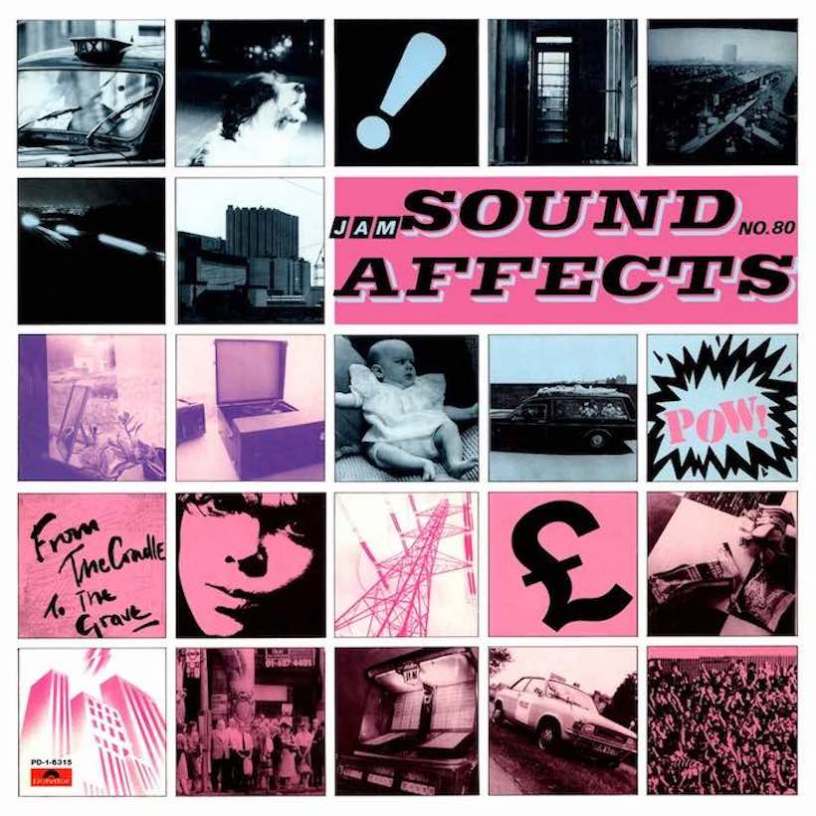
Although The Jam was considered a Punk group, the reality is that, despite being influenced by Punk music, they were well above all that. This is one of their better received releases, especially given that the band were nearly dropped from their record label after the quality of their earlier music was very sub-par. Paul Weller, the singer-songwriter of The Jam allegedly was a historical person, taking deep influence from The Beatles own successful 1966 album Revolver to keep the flame of The Jam burning for this release. The album title also indicates that listening to music is not a passive experience, hence the name of the album. Let’s go back in time to 1980 and see how this popular and well-loved album fares today.
Pretty Green begins with a thumping bassline and a 1980s styled reverberated drumbeat. This tune is about the power of money, in a cynical and social commentary based way. It reveals the truth about the real power behind the world, and the song itself is a clever listen. The English poetry styled lyrics likely inspired bands like The Smiths in the future. “Power is measured by the pound or the fist,” indeed. The British had just elected Margaret Thatcher as Prime Minister back in 1979, to very mixed results, hence the context. A key change is present in the second half, and this tune sounds absolutely wonderful for the message, perhaps more so than the music here. A very good, but dated sounding listen. It ends with a loud, reverberated snare hit.
Monday begins with pleasant bass guitar and electric guitar riffs before this tune launches into quite a good song about wanting to see a work colleague that one is infatuated with. A really cool, catchy and memorable listen, there are layers of instrumentation here that indicate that this isn’t necessarily Punk music. Instead, it follows its own course musically, complete with electric piano and harpsichord parts. Even for a lesser track on this album, it works nicely. Paul Weller puts his heart on his sleeve here, and he delivers well. A cool and soothing listen. It has a lengthy fade out, but a pleasant listen overall.
But I’m Different Now is a short piece under two minutes long in length with a barrage of electric guitar riffs and playing that is awesome. All in all, this is a really cool tune to hear and to listen to. Sounding very Punk, Paul Weller and company deliver a short and somewhat consistent listen. The riffs in the second half change to a different style in playing, before this song reaches a quick and frenetic outro. Good for a lesser track.
Set The House Ablaze begins with a very Sex Pistols-ish guitar riff, and launches into a punchy piece with some whistling. To be fair, this sounds incredibly dated with awful 1980s Pop/Rock production that could have been stripped down a lot. It’s another good song, ruined by contemporary ideals about how albums should sound. The song itself regardless is very good. It just is ruined by watery sounding 1980s production. The music nonetheless is quite good. It’s not necessarily skippable, just needs better production and mixing overall. The fact that Paul Weller’s vocals are drenched in reverberated echo and are mixed out to the point you can barely hear them is not good. A recording closer to a live performance would have been much more acceptable. There is a gluggy-sounding breakdown around the midsection of this song, followed by a key change and a return to the chorus. The playing and performances are really great, however. It just goes to show that The Jam were professionals, after all. Paul Weller sings well here, and the whole tune is quite good, despite its obvious limitations. Some awesome drum rolls are here towards the end. The tune eventually eliminates the drums, leaving just guitars swirling and Paul Weller’s la-la-la’s, before the drums return and this song concludes. Weird, weird. Not the best moment on the album.
Start! uses the main riff from The Beatles Revolver tune Taxman as the bass guitar riff. It’s a clean and pristine sort of song that was a hit single at the time. To be honest, this is also the best song from this album as well, and it is easy to hear why. It is a cynical, negative sort of lyricism set to a Pop-based tune. The songwriting is the real standout here, with lines that make sense if you are in an angry mood. There is a breakdown near the middle of this song, which sounds sweet, followed by reversed guitar soloing. A bit of an oddity in 1980, but one that nonetheless works musically. The song is nicely constructed, but that’s about it. Good to hear now and again, but nothing outstanding here, and that is for the best song on the entire album. “What you give is what you get,” is chanted here repeatedly, before the song abruptly finishes.
That’s Entertainment begins with some awesome acoustic guitar progressions, and dark basslines and launches into a piece of music that is about negative events. The purpose of this song is not very clear, and it articulates the worst of Britain at the time. This was just after the so-called Winter Of Discontent where there were massive public sector strikes, and this affected a society that already was going down the gurgler, only followed by the election of Margaret Thatcher, which divided people further. That is the context for this song, and it is a good song, despite the fact it doesn’t make much sense to the listener. More reversed guitars are here, but to be fair, the Revolver-isms are a bit much for this type of music. Regardless, a good song that is rather underrated from this album. The harmonies at the end are very nice, however. There is little clarity of what this song is actually supposed to make one feel upon listening, all the same.
Dream Time has some reversed guitar and ghostly singing that is faded in at the start. Again, the Revolver-isms are done to death here. This is a strange listen that is quickly mixed back out. Soon enough, a rather forgettable and average tune enters which isn’t really special in any way present. It’s not terrible music, it just sounds nothing special overall. The Jam had done better before. Regardless, it is okay to hear and the playing is good, along with the songwriting. It just lacks appeal and sounds very bland musically. These songs are a bit of a drag to get through at this point. It lacks the punchiness of the Sex Pistols, the variety of The Clash or the emotion of Joy Division, to put a proper comparison here to other Punk based bands. The outro is nothing memorable nor enjoyable, once again. A bit of a yawn as a song.
Man In The Corner Shop begins with muted guitar riffs, and a drum roll and launches into another poetic musing by Paul Weller. It’s another fairly forgettable tune about the boring and mundane nature of modern life. Truth is, this makes no sense, most people have choices in life about what they wish to do. So the point of this song? There is no point. It’s okay musically but is a drag, which isn’t good. One wishes Paul Weller made a more exciting set of songs on this album. A tiresome rant against Christians, this is not one should celebrate hearing. Very boring.
Music For The Last Couple begins with handclaps, percussion and other unusual sounds to begin with, which are different. This is Paul Weller in experimental mode. These sounds quickly fade out and are replaced with the sound of a fly buzzing around. Weird, all right. Eventually, the song gets going and it is again, just okay. Not outright bad, just fairly meh. This one has a Ska Reggae feel to it, which was all the rage at the time. There are some minimal lyrics as well. Again, nothing super memorable or special here. The music drags on quite obviously here, and this sounds like another rather pointless song. More of an actual jam rather than a song, this music lacks purpose. It hasn’t aged well at all, sounding way too 1980s for its own good. It eventually fades out.
Boy About Town begins with the sound of laughter and quickly launches into a really lame song about nothing in particular. Who knows what Paul Weller was thinking at this time? Enough to send one to sleep while listening, and the horns here are totally unnecessary and cheesy. This is the equivalent of musical junk. Nothing special here, and the album loses it at this point. Very ordinary, go and listen to music that you enjoy rather than this trash. A pathetic joke of a song.
Scrape Away is the last song here, thank goodness. It has some good bass guitar playing, but by this point of the album, this is worth switching off. The sad fact that this has aged poorly does not assist with the listening process. Paul Weller whinges about more modern ongoings in the UK, which isn’t really necessary to listen to. The delayed vocals add nothing special here, and the whole thing sounds very daft and boring. This ends a rather disappointing album with another very dated, pointless and forgettable song that sounds repetitive and bland. The repeated vocals and sound effects do not help this be a more inviting listen. The outro is far too long and is seemingly only there to throw in a few sound effects. It ends with some stark bass guitar, drums and some French being spoken. Not good enough, it eventually fades out.
It is difficult to talk up this album. It is not a classic album release by The Jam in any way, shape or form. The positive of this album is the fact that it sounds well-produced. That’s about it in that respect, the negatives of the album are fairly omnipresent: bland sounds; poor mixing; boring songs and too much of a sell-out vibe. The Revolver-isms do not help this album either. Should you still listen to this album? Only if you have heard The Jam’s music before and enjoyed it, otherwise, avoid this release totally.
Super boring and a drag to get through.
5/10
 The Ultimate Music Library